Review: 3D Christmas Shadow Box Snowman Design
As a designer who spends more time at the hoop than away from it, I approach every new machine embroidery design with a mix of curiosity and skepticism. The market is flooded with holiday motifs, but few offer the structural depth required for high-end boutique work. Recently, I evaluated the 3D Christmas Shadow Box 3D Snowman to see if it holds up under the scrutiny of real-world production. This isn't just about whether the file opens; it's about how the layers interact, how the shadows play against the fabric texture, and whether the final finished product justifies the price point for a discerning customer.
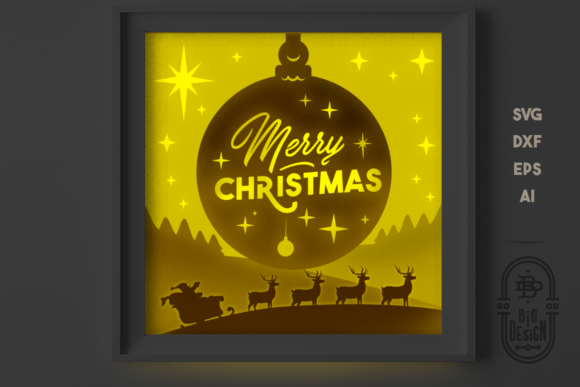
My first impression upon loading the files was one of organized potential. The package arrives as a single ZIP file containing SVG, DXF, EPS, and AI formats. For those of us working across different cutting machines and embroidery software, having this versatility in one digital embroidery file is a significant time-saver. The default size is listed at 8×8 inches, which is a substantial footprint. In the world of holiday embroidery, this scale suggests the design is intended to be a statement piece rather than a subtle accent. It commands attention, making it ideal for center-stage applications like tote bags, pillow covers, or the front panel of a heavy-weight sweatshirt.
Visual Depth and Structural Integrity
The core appeal of this 3D SVG lies in its "shadow box" aesthetic. Unlike flat vector art that relies solely on thread density to create dimension, this design utilizes layered geometry to simulate depth. When I visualized this as an applique design or a multi-layered stitch-out, the potential for tactile interest became immediately clear. The snowman figure is not just a outline; it is constructed with elements that suggest foreground and background separation. This is crucial for Christmas decor, where we want to evoke a cozy, dimensional feel reminiscent of traditional paper crafts but executed in thread.
However, visual appeal must always be balanced with stitching reality. A design that looks stunning on a screen can become a nightmare if the stitch density is too high for the chosen fabric. With an 8-inch design, you are looking at a significant amount of thread coverage. If you are planning to use this on a lightweight cotton tee, you will absolutely need a robust stabilizer system—likely a combination of cut-away and perhaps even a water-soluble topper to prevent sink-in on textured fabrics. For sweatshirt embroidery or fleece, the fabric itself provides enough body to support the weight of the design, but you must still be mindful of how the layers stack. Too much bulk in a small area can cause puckering, ruining the clean lines of the shadow effect.
Real-World Application: The Boutique Tote Scenario
To truly test the viability of the 3D Christmas Shadow Box 3D Snowman, I imagined a specific client project: a limited run of holiday gift totes for a local boutique. The goal was to create a handmade product that felt premium and reusable. An 8×8 inch design fits perfectly on a standard canvas tote without overwhelming the surface.
In this scenario, the layered nature of the design allows for creative material choices. You could embroider the base layers on the bag and then appliqué specific elements of the snowman using contrasting fabrics, enhancing the 3D effect. The inclusion of the Christmas Bell element mentioned in the description adds a nice focal point that breaks up the white space often associated with snowmen. For an Etsy seller, this kind of detail increases perceived value. Customers are willing to pay more for items that show complexity and thought in their construction. A flat, single-color snowman is common; a multi-dimensional shadow box snowman feels like a custom commission.
Furthermore, this design translates well to custom apparel. Imagine it centered on the back of a denim jacket or the chest of a heavy hoodie. The scalability of the SVG file means you can adjust the dimensions if your hoop size is restrictive, though shrinking it too much might compromise the fine details of the shadow layers. Always check the smallest elements before resizing. If the gaps between the shadow layers become too narrow, they may fill in with thread during stitching, losing the intended depth.
Technical Considerations for Professional Results
While the artistic merit is high, practical execution requires careful planning. Here are the critical factors I consider before committing this design to a client order:
- Fabric Selection: Avoid stretchy or slippery fabrics unless you are an expert hoarder. The weight of an 8-inch design can distort knits. Stick to woven cottons, linens, denim, or stable fleece.
- Thread Contrast: The success of a shadow box design relies on contrast. Ensure your thread colors are distinct enough to separate the layers visually. Using shades that are too similar will flatten the 3D effect.
- Stabilizer Strategy: Do not skimp here. For a design of this magnitude, a no-show mesh might not be enough. Test on scrap fabric first to determine if a cut-away stabilizer is necessary to maintain shape after washing.
- Detailed Corners: Inspect the digital preview for sharp corners or tiny junctions. These are prone to bird-nesting if the machine speed is too high or the tension is off.
- Licensing Verification: The product description notes it is a digital file with various formats, but it does not explicitly detail the commercial license terms. Before selling small shop products or listing these as design assets, confirm with the creator whether the license allows for unlimited physical sales or if there are restrictions on digital redistribution.
Enhancing Brand Value and Customer Trust
Using a sophisticated design like the 3D Christmas Shadow Box 3D Snowman directly impacts your brand consistency. When customers receive a personalized gift or a boutique item that features crisp, well-executed layering, it builds trust. They recognize the effort involved. This is particularly important for commercial embroidery projects where you are competing with mass-produced goods. Your advantage is the ability to offer depth and texture that factories cannot easily replicate.
Additionally, this design serves as an excellent basis for printable mockups. Because the SVG and AI files are vector-based, you can easily create high-resolution previews for your online store before you even stitch a single thread. This helps in gauging customer interest and securing pre-orders. Whether you are creating an embroidered patch for a holiday collection or a centerpiece for a nursery decor line, the versatility of the file formats ensures you can adapt the artwork to various marketing materials.
Final Verdict for the Working Designer
The 3D Christmas Shadow Box 3D Snowman is a robust asset for any serious maker. It moves beyond the generic clip-art style often found in holiday collections and offers genuine structural interest. However, it demands respect in the hoop. It is not a "set it and forget it" design; it requires thoughtful fabric pairing, appropriate stabilization, and potentially some manual tweaking of stitch paths depending on your specific machine setup.
For craft business owners looking to elevate their holiday offerings, this design provides a solid foundation. It works beautifully on tote bag designs, aprons, and kitchen towels where the 8-inch scale is an asset rather than a hindrance. Just remember to test your stitch density on scraps, verify your commercial rights, and choose your thread colors with an eye toward maximizing that beautiful shadow effect. When executed correctly, this design doesn't just decorate a product; it transforms it into a keepsake.