Review: 3D Layered Hummingbird SVG Cut File
As a designer who spends half my life staring at stitch maps and the other half managing client expectations, I approach every new machine embroidery design with a mix of curiosity and skepticism. When I first opened the archive for the 3D Layered Hummingbird SVG Cut File, my initial reaction wasn't about the vector paths themselves—since this is primarily marketed for Laser Cutting and Wall Decor—but rather how these clean, layered shapes could translate into a tangible embroidery project. In our industry, a file is only as good as its performance on the hoop, and I wanted to see if this specific asset held up under the needle for real-world applications.
First Impressions and Visual Personality
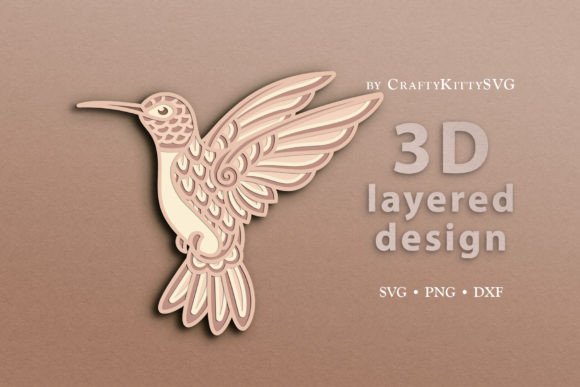
The immediate mood this design creates is one of delicate motion. Hummingbirds are notoriously difficult to capture because their energy comes from blur and speed, yet this file manages to freeze that energy in a structured, geometric way. The "3D" aspect refers to the layering strategy, which is brilliant for creating depth without relying solely on complex shading stitches. For an Etsy seller or small shop product creator, this visual personality screams "boutique." It feels modern enough for a trendy tote bag design but classic enough for a heirloom baby embroidery piece.
When evaluating the layout, the separation of elements suggests a natural workflow for appliqué or layered satin work. The wings, body, and beak are distinct, allowing a designer to play with thread colors to enhance the dimensionality. If you are used to working with flat digital embroidery files, this layered approach offers a refreshing opportunity to mix textures. Imagine using a matte thread for the body and a high-sheen rayon for the wings to mimic the iridescence of a real hummingbird. The shape is fluid, avoiding the jagged edges that sometimes plague converted vector files, which is a huge plus for maintaining a professional look in your finished product.
Real-World Application: The Custom Sweatshirt Scenario
To truly test the viability of this design, I envisioned a specific client request: a custom sweatshirt embroidery order for a nature-loving teacher. She wanted something subtle yet striking on the chest pocket area. This is where the 3D Layered Hummingbird SVG Cut File shines. Because the design relies on distinct layers, it adapts well to the thicker texture of fleece or French terry.
In this scenario, I would treat the vector layers as a guide for a multi-step appliqué process. Instead of trying to fill the entire bird with dense stitching—which can make a sweatshirt stiff and uncomfortable—I would use the file shapes to cut lightweight felt or stable cotton. This reduces the stitch density significantly while keeping the crisp lines of the original vector. The result is a soft, flexible handmade product that survives frequent washing without puckering. Customers reacting to this would likely appreciate the tactile quality; it doesn't feel like a sticker stuck on fabric, but rather an integrated part of the garment. This level of detail builds customer trust and justifies a higher price point for your craft business.
Versatility Across Product Lines
Beyond apparel, this design has serious potential for home goods. A pillow cover or kitchen towel featuring this hummingbird could become a signature item for a spring collection. The clean lines work exceptionally well on woven fabrics like linen or canvas, where the contrast between the thread and the fabric texture adds to the aesthetic. For holiday embroidery gifts, perhaps for Mother's Day, the motif is timeless. It also translates beautifully to embroidered patch creation. By digitizing the layers into a merrow-edge patch format, you create a durable accessory that clients can iron onto jackets or bags, expanding your revenue streams beyond direct-to-garment services.
However, we must address the elephant in the room: this file is sold as an SVG for laser cutting. While the shapes are perfect for wood or acrylic Wall Decor, using them for embroidery requires a keen eye for adaptation. You cannot simply load an SVG into most embroidery machines without conversion or manual digitization. The value here lies in the blueprint it provides. It gives you the perfect proportions and layer separation, saving you hours of tracing and planning. For commercial embroidery projects where time is money, having a pre-vetted shape layout is a massive advantage.
Critical Considerations for Execution
While the design is stunning, there are areas where caution is required. If you plan to use this on a cap or other curved surface, the detailed corners of the wings might cause registration issues if the layers are too tight. On stretchy fabrics, such as a thin t-shirt, the density of the fill stitches (if you choose to fill rather than appliqué) needs careful management. Too much saturation, and the fabric will pucker, ruining the sleek silhouette. Similarly, on dark fabrics, you must ensure your underlay is sufficient to prevent the background color from bleeding through the lighter thread sections of the bird.
Small hoop sizes present another challenge. If the design is large, you may need to split the stitching or use a larger frame, which can be tricky on certain machines. Always check the dimensions against your available hoop size before committing to a production run. Furthermore, tiny details like the beak or eye require precision; if scaling the design down for a baby onesie, ensure those elements don't disappear or become a tangled mess of threads.
Designer Notes for Best Results
Before launching this into your Etsy listings or using it for a paid client, follow these practical steps:
- Test on Scrap First: Never skip this. Stitch the design on the exact same fabric weight and type you intend to use for the final sale.
- Check Thread Contrast: Use a black-and-white mockup or actual thread swatches to ensure the layers distinguish themselves clearly. Low contrast can make the "3D" effect vanish.
- Review Stitch Density: If digitizing from this SVG, keep fill densities moderate (around 0.4mm to 0.5mm) to maintain fabric drape.
- Stabilizer Selection: For knits like sweatshirts, use a cut-away stabilizer to support the weight of the design over time. For wovens, a tear-away might suffice depending on the stitch count.
- Licensing Verification: Since this item includes vector files often used for commercial cutting, double-check the specific license terms regarding commercial embroidery usage. Ensure you are allowed to sell the stitched finished product or if restrictions apply to digital resale.
In conclusion, the 3D Layered Hummingbird SVG Cut File is a versatile asset that bridges the gap between digital precision and textile art. While it requires some translation from laser-cut vectors to embroidery stitches, the underlying structure is sound. It offers a professional, high-value look that elevates custom apparel and personalized gifts. With careful attention to fabric choice and stitch technique, this design can become a staple in your portfolio, helping you create memorable pieces that resonate with buyers looking for quality and creativity.